Display your data; control your data logger


概览
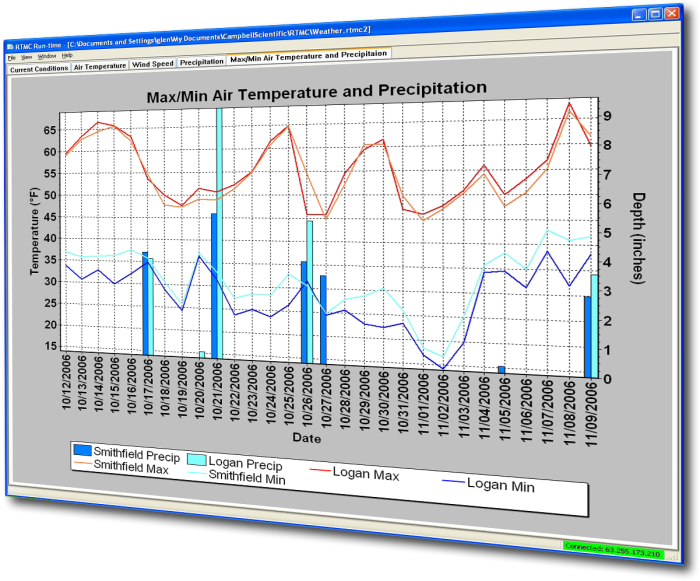
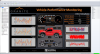
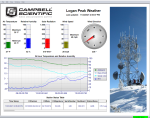
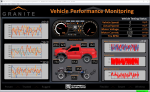
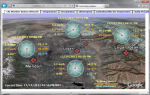
RTMC Pro 用于创建和运行提供实时监视和控制功能的图形显示。利用其强大的数据库包括警报、开关、状态栏,图表和测量计可以轻松的设置显示的内容。随意选择一个组件,将其置于工作空间,数据值便会显示。每个组件都有属性,用户可以设置的最大设计控制。
该版本是RTMC的加强版,需单独购买。
优势与特点
- Large library of components: alarms, switches, status bars, charts, gages, and more
- Interactive components (switches, drop lists, digital set points, dials) let you toggle flags or set data logger values directly from your RTMC display
- Securely monitor and control your data from virtually anywhere by publishing your RTMC projects to your intranet or the Internet using the included Web Publisher and CSI Web Server
- View data from multiple LoggerNet servers, Campbell Scientific data files, LNDB databases, HTTP data loggers, and virtual data sources all in one RTMC project
- Send email messages or execute programs when alarms are triggered
- Create reports that allow you to easily step through historical data and export an RTMC screen either on a schedule or manually
- Use the extensive math and logic expression library to convert and/or combine your data for display
图像
技术说明
RTMC Pro, an enhanced version of RTMC, includes a development and a run-time program. Specifically, RTMC Pro provides the following:
- The ability to use LNDB databases, Campbell Scientific data files, HTTP data loggers, virtual data sources, and multiple LoggerNet Servers as data sources
- The CSI Web Server for viewing your data from a web browser
- The ability to generate reports
- More graphical components. For example, more alarms, switches, graphs, gauges, and layout components are available
- Components to run/open a file, run a Cora-Script command (LoggerNet command), or view a web page.
- Images of the project that can be saved and transferred to a web server automatically
- The ability to send email messages or execute programs when alarms occur. Alarm activity can be logged to a file
- More settings for components existing in both RTMC and RTMC Pro, which enables more design control
RTMC Run-Time and the CSI Web Server can run projects created with RTMC Pro's development program. For best compatibility between RTMC or RTMC Pro projects and RTMC Run-Time, the version numbers of the applications should match.
- Projects created with a newer version of RTMC or RTMC Pro will not run in an older version of RTMC Run-Time. As an example, a project created with RTMC Pro 5.0 will not run in RTMC Run-Time 4.0.
- Projects created with an older version of RTMC or RTMC Pro will open and run, but component size or placement may not match the original project, requiring the project to be edited.
An upgrade for RTMC Pro must be purchased separately if you have these earlier versions of RTMC Pro.
产品规格
| Operating System | Windows 11 and 10 (Both 32- and 64-bit operating systems are supported.) |
| Purchased Separately | Yes, as an enhancement to RTMC |
| Software Level | Intermediate to advanced |
| Scheduled Data Collection Supported | Yes |
| Real-Time Updates | Yes |
| Alarms | Real-time, visual, audible, multilevel alarms possible, alarm log, launch programs, email notifications |
Military Certificate of Networthiness (CoN) |
|
| Certifications |
|
兼容性
Please note: The following shows notable compatibility information. It is not a comprehensive list of all compatible products.
数据采集器
| Product | Compatible | Note |
|---|---|---|
| 21X (retired) | The 21X requires three PROMs; two PROM 21X Microloggers are not compatible. | |
| CR10 (retired) | ||
| CR1000X (retired) | ||
| CR10X (retired) | RTMC Pro is compatible with the mixed array, PakBus, and TD operating systems. | |
| CR200X (retired) | ||
| CR206X (retired) | ||
| CR211X (retired) | ||
| CR216X (retired) | ||
| CR23X (retired) | RTMC Pro is compatible with the mixed array, PakBus, and TD operating systems. | |
| CR295X (retired) | ||
| CR300 (retired) | ||
| CR3000 (retired) | ||
| CR310 | ||
| CR350 | ||
| CR500 (retired) | ||
| CR5000 (retired) | ||
| CR510 (retired) | RTMC Pro is compatible with the mixed array, PakBus, and TD operating systems. | |
| CR6 | ||
| CR800 (retired) | ||
| CR850 (retired) | ||
| CR9000 (retired) |
Additional Compatibility Information
Software
RTMC Run-Time and CSI Web Server can run projects created with RTMC Pro's development program. For best compatibility between RTMC or RTMC Pro projects and RTMC Run-Time, the version numbers of the applications should match.
- Projects created with a newer version of RTMC or RTMC Pro will not run in an older version of RTMC Run-Time. As an example, a project created with RTMC Pro 5.0 will not run in RTMC Run-Time 4.0.
- Projects created with an older version of RTMC or RTMC Pro will open and run, but component size or placement may not match the original project, requiring the project to be edited.
An upgrade for RTMC Pro must be purchased separately if you have these earlier versions.
Computer
RTMC Pro runs on Windows 10 and 11. RTMC Pro runs on both 32-bit and 64-bit versions of these operating systems.



下载
RTMC Pro Patch v.5.0.2 (102 MB) 09-04-2026
This patch upgrades RTMC Pro 5.0 to 5.0.2.
Note: This application requires the Microsoft .Net 4.0 Framework. If it is not already installed on your computer, it can be obtained from the Microsoft Download Center.
RTMC Pro Trial v.5.0.2 (85.7 MB) 09-04-2026
A fully functional 30 day trial version of RTMC Pro (Real Time Monitoring & Control) software for creating custom data displays. RTMC Pro is an enhanced version of RTMC that contains more graphical components, more alarms including email alarm events, run/open, hotspot and snapshot capabilities. The CSI Web Server is also included.
Note: This application requires the Microsoft .Net 4.0 Framework. If it is not already installed on your computer, it can be obtained from the Microsoft Download Center.
RTMC Pro Patch v.4.3.3a (87.7 MB) 22-05-2024
This patch upgrades RTMC Pro 4.0 and newer to 4.3.3a.
Note: This application requires the Microsoft .Net 4.0 Framework. If it is not already installed on your computer, it can be obtained from the Microsoft Download Center.
常见问题解答
RTMC Pro: 46
展开全部收起全部
-
The table component of RTMC Pro has the option to display the newest data at the top of the table. It can then be set up to save images of that table component or the entire screen (for use in an HTML page), or the RTMC Pro project itself can be run in the RTMC Web Server.
Using RTMC Pro Dev, select the New Data At Top table option property.
-
Shape rotation does not currently work in RTMC Pro. There is a work around, however. Save the shape as an image from the shape property page using the disc icon at the bottom right of the screen. Then load the saved image into an image component that has rotation capabilities.
-
RTMC Pro has an Invert Axis property for all axes on a chart. By inverting the bottom axis, the most recent data, along with its time stamp, is displayed on the left with the oldest on the right.
-
The CSI Web Server can only be configured to be a stand-alone web server. RTMC Run-Time does have the ability to periodically generate web pages from the project and to transfer these files to an FTP server. To use the interactivity that is possible with the CSI Web Server, use iframes in web pages that can reference pages served by the CSI Web Server.
-
RTMC is a client to the LoggerNet server. This means that it does not directly interact with the data loggers. Rather, RTMC gets data from the LoggerNet data cache or from collected data files (for example, *.dat). If the RTMC project is pointed to a variable in the Public table, Scheduled Data Collection must be enabled for the Public table in LoggerNet. The timing of Scheduled Data Collection dictates the frequency at which new data are available for RTMC to display.
-
Yes. RTMC Pro includes options to export entire screens or specific objects. These images can then be incorporated into a separate web page.
-
LoggerNet Admin can be run as a service by installing the included LoggerNet service manager. Projects published as web pages to the CSI Web Server will also run as a service.
-
This can be done by comparing the last time stamp of the value with the current system time within an IIF() function.
-
Consider using IIF(). Here is an example of using the last value instead of the -6999 in a min run over a day with temp avg:
Alias(X, "Server:CR1000.HOUR.Temp_F_Avg"); StartRelativeToNewest (nsecPerDay, OrderCollected ); MinRunOverTime(IIF(X = -6999, last(X), X), Timestamp(X), nsecPerDay)
案例研究

Intelligent Infrastructure Systems, a Pennoni company, was contracted to design and install an efficient structural-health......阅读更多
Hot Springs, Arkansas, is a history-rich city located adjacent to Hot Springs National Park. The......阅读更多

The Channel Tunnel (or Chunnel) connects the United Kingdom with France. It is actually a......阅读更多